New Orleans is a city where history, culture, and spirituality intertwine like nowhere else in the United States. During my recent visit to the New Orleans Historic Voodoo Museum, I stepped into a space that challenges myths, corrects misconceptions, and reveals the deeply human story behind one of the most misunderstood spiritual traditions in the world.
Located in the heart of the French Quarter, this small yet powerful museum offers far more than artifacts behind glass—it provides context, respect, and a living connection to New Orleans’ African, Caribbean, and Creole roots.
Where Is the New Orleans Historic Voodoo Museum?
The New Orleans Historic Voodoo Museum is located at 724 Dumaine Street, just steps away from Bourbon Street. Despite being surrounded by the city’s busiest tourist areas, the museum feels like a quiet threshold into another world.
The building itself is historic, narrow, and intimate—perfectly suited for a subject that thrives on personal experience rather than spectacle.
First Impressions: Small Space, Powerful Energy
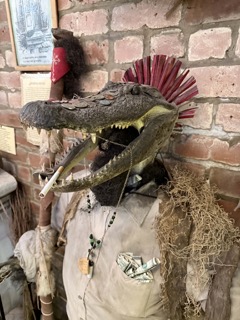
Walking into the museum, the first thing I noticed was how intimate the space felt. This isn’t a polished, corporate museum—it feels more like stepping into a preserved spiritual home. Dim lighting, worn wooden floors, and the faint smell of incense set the tone immediately.
Every corner is filled with meaning:
- Altars layered with candles, offerings, and symbols
- Handwritten notes and photographs
- African, Haitian, and Creole ritual objects
- Artifacts associated with Marie Laveau, New Orleans’ most famous Voodoo practitioner
Rather than feeling eerie or theatrical, the atmosphere felt reverent and grounded.
Understanding Voodoo Beyond the Myths
One of the museum’s greatest strengths is how clearly it dispels common myths about Voodoo.
There are no Hollywood horror tropes here—no mindless zombies or evil curses. Instead, the museum explains that Louisiana Voodoo is a spiritual system rooted in:
- West African religious traditions
- Haitian Vodou
- Catholic symbolism
- Indigenous and Creole cultural practices
At its core, Voodoo is about connection—to ancestors, to nature, to community, and to the spiritual world.
Marie Laveau and the Power of Legacy
A significant portion of the museum is dedicated to Marie Laveau, the legendary Voodoo Queen of New Orleans. Rather than portraying her as a mysterious sorceress, the museum presents her as:
- A community leader
- A healer and spiritual advisor
- A woman who held influence in a racially divided society
Photos, stories, and symbolic representations show how her legacy continues to shape New Orleans spirituality today.
Seeing how Marie Laveau is contextualized here helped me understand her not as folklore, but as a real historical figure whose power came from trust and service, not fear.

Altars as Living Spaces
One of the most striking aspects of the New Orleans Historic Voodoo Museum is that the altars are active, not decorative. Visitors are encouraged to approach with respect, and many leave:
- Coins
- Written prayers
- Flowers
- Candles
These offerings make the museum feel alive—constantly evolving as people from around the world bring their intentions into the space.
It felt less like observing history and more like participating in an ongoing spiritual dialogue.
Education, Not Exploitation
What truly sets this museum apart is its commitment to education over entertainment. The exhibits explain:
- The role of spirits (lwa)
- The importance of rituals and symbolism
- The blending of Catholic saints with African deities
- The cultural survival of enslaved peoples through spirituality
This respectful approach made my visit feel meaningful, not voyeuristic. It encourages visitors to reflect on how spiritual traditions adapt, survive, and resist erasure.

Why the New Orleans Historic Voodoo Museum Matters
In a city known for ghost tours and supernatural storytelling, this museum stands out by offering truth, depth, and cultural respect.
It preserves:
- African diasporic history
- Creole spiritual identity
- Oral traditions often excluded from mainstream museums
More importantly, it reminds visitors that Voodoo is not something frozen in the past—it’s a living spiritual practice that continues today.
Tips for Visiting the New Orleans Historic Voodoo Museum
If you’re planning a visit, here are a few things I’d recommend:
- Take your time: The museum is small, but dense with information
- Read everything: Many insights come from handwritten notes and placards
- Be respectful: This is a spiritual space, not a novelty attraction
- Ask questions: Staff members are often knowledgeable and open to discussion
Expect to spend about 30–60 minutes, though the impact lasts much longer.
A Quiet Highlight of New Orleans
Visiting the New Orleans Historic Voodoo Museum was one of the most thought-provoking experiences of my trip. It offered a rare opportunity to move past stereotypes and engage with a spiritual tradition on its own terms.
In a city famous for noise and celebration, this museum provides something quieter—but far more powerful: understanding.
If you’re interested in history, spirituality, or the deeper cultural soul of New Orleans, this is a stop you should not miss.
Watch the video below.